

Virtual Phone Number vs Second SIM: Which Is Better?
If you need a separate phone number for work, travel, or privacy, you generally have two options: buy a second SIM card or use a virtual phone number. A virtual number lets you keep your existing phone and SIM while forwarding calls from a dedicated US or Canadian number, making it the simpler option for many people.
Whether you need a separate phone number for work, travel, or privacy, you generally have two choices: buy a second SIM card or use a virtual phone number. Both give you another phone number, but they work very differently. Understanding those differences can save you money, reduce hassle, and help you choose the right solution for your needs.
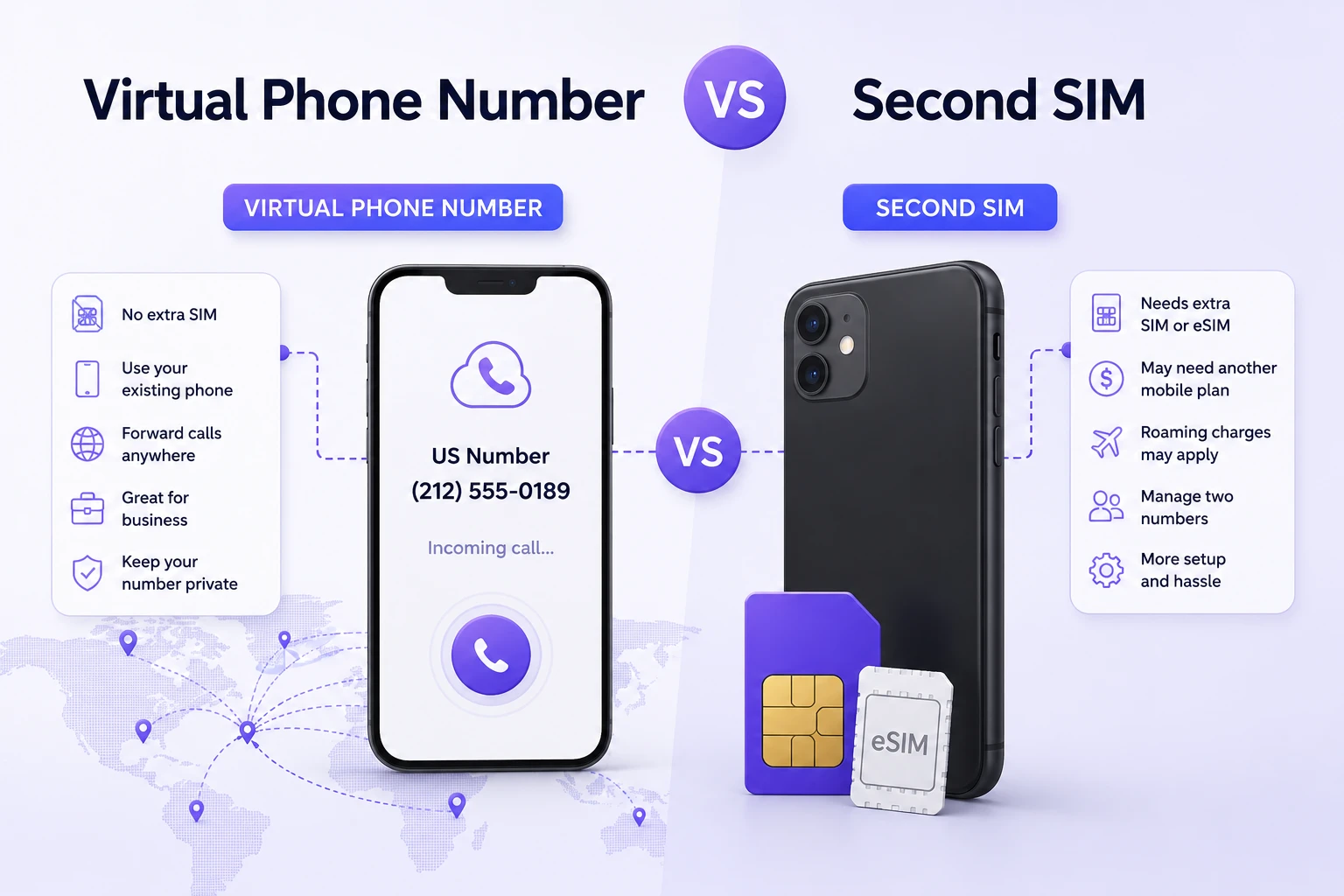
What is a second SIM?
A second SIM gives your phone another mobile subscription through a traditional carrier. Depending on your device, this might be a physical SIM card or an eSIM.
A second SIM works well if you need another mobile plan, extra data, or another carrier. However, it also means managing an additional mobile subscription, and in some cases paying roaming charges if you travel.
What is a virtual phone number?
A virtual phone number is not tied to a physical SIM card. Instead, it forwards incoming calls to the phone you already use.
For example, someone can call your US number while you answer on your existing mobile in Norway, Canada, Australia, or almost anywhere else in the world. You keep your current SIM, your existing phone, and your normal mobile plan.
Virtual phone number vs second SIM
| Feature | Virtual Phone Number | Second SIM |
|---|---|---|
| Requires another SIM card | No | Yes |
| Uses your existing phone | Yes | Usually |
| Requires another mobile plan | No | Yes |
| Great for business | Yes | Good |
| Keeps your personal number private | Yes | Yes |
| Forward calls worldwide | Yes | Depends on your carrier |
| Easy to cancel | Yes | Depends on your carrier |
When a second SIM is the better choice
A second SIM or eSIM is often the right solution if you:
- Need another mobile carrier.
- Want an additional mobile data plan.
- Spend most of your time in one country.
- Prefer a traditional mobile subscription.
When a virtual phone number is the better choice
A virtual phone number is usually the better option if you:
- Live abroad.
- Travel frequently.
- Need a US or Canadian phone number.
- Want to separate business and personal calls.
- Want to keep using your existing phone.
- Do not want another SIM card or mobile contract.
Cost comparison
Many people assume a second SIM is the cheaper option.
In reality, a dual SIM or eSIM often means paying for another mobile subscription every month, and depending on where you travel, roaming charges may also apply.
A virtual phone number is typically a simple monthly or annual subscription that forwards calls to the phone you already have. You continue using your existing carrier while only paying for the additional number.
Convenience comparison
Managing a second SIM often means switching between numbers, configuring dual-SIM settings, or managing two carrier accounts.
With a virtual phone number, nothing changes about the phone you carry every day. Your existing mobile rings whenever someone calls your virtual number, making it feel like you only have one phone.
Business and privacy
Many freelancers, consultants, and small business owners do not want clients calling their personal number.
A virtual phone number lets you publish your business number on your website, email signature, invoices, and social media while keeping your private mobile number hidden.
If you ever change your mobile carrier or SIM card, you simply update the forwarding destination without telling every customer about a new number.
Which option should you choose?
Choose a virtual phone number if you:
- Want a US or Canadian number.
- Live outside the country.
- Need a business phone number.
- Want to protect your personal number.
- Prefer using the phone you already own.
Choose a second SIM if you:
- Need another carrier.
- Need another mobile data plan.
- Mostly stay in one country.
- Prefer managing multiple mobile subscriptions.
Final thoughts
Both options provide another phone number, but they solve different problems.
If you need another mobile subscription with its own data plan, a second SIM is usually the better choice.
If your goal is keeping your personal number private, getting a local US or Canadian number, or receiving business calls on the phone you already carry, a virtual phone number is typically the simpler and more flexible solution.
You can compare plans and get started on the pricing page or choose your number on the US phone number page.
Why choose LocalLine?
- No second SIM or second phone required.
- Get a US or Canadian phone number in minutes.
- Forward calls to your existing phone anywhere in the world.
- Keep your personal mobile number private.
- Cancel anytime with no long-term contracts.